

TREATMENTS

Non-Surgical Care

Targeted non-surgical treatments to relieve pain, reduce inflammation, and restore function.

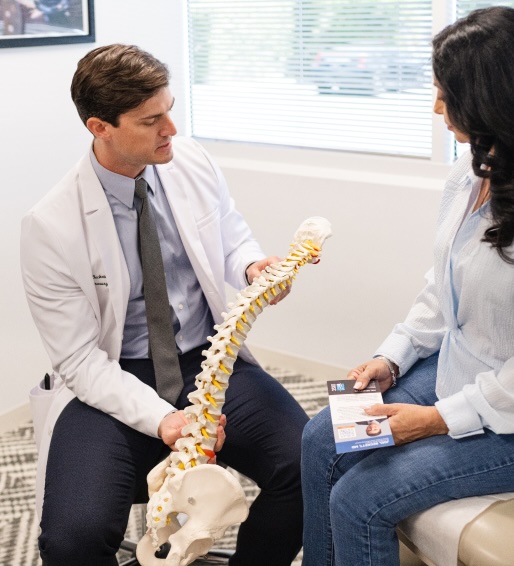
Most patients who come to Beckett NeuroSpine are not looking for surgery—they’re looking for answers. For many, the right answer is a structured, expert-guided course of non-surgical care that addresses the actual source of their symptoms.

The goal is not simply to manage pain, but to restore function and determine whether symptoms can be resolved without surgery. When conservative care promises to be effective, it remains the best path forward.

Conservative Treatment Options

These therapies are designed to relieve symptoms and improve function without surgery.

Medications

Targeted use of anti-inflammatory, muscle relaxant, or neuropathic medications to manage acute or chronic spine-related symptoms. Medications are typically used as part of a broader treatment plan rather than as a standalone long-term solution.

Activity Modification & Structured Rehabilitation

Guided adjustments to daily movement, posture, and activity levels to reduce mechanical stress on the spine and support recovery. When combined with physical therapy, activity modification helps patients build sustainable habits that protect long-term spinal health.

Physical Therapy

Structured rehabilitation programs guided by a physical therapist designed to improve strength, flexibility, and spinal stability. Physical therapy targets the underlying movement patterns and muscle imbalances that contribute to spine-related pain.

Epidural Steroid Injections

Image-guided injections that deliver anti-inflammatory medication directly to the affected area of the spine. Epidural steroid injections are particularly effective for nerve-related pain, including radiating arm or leg symptoms caused by disc herniation or spinal stenosis.

Facet Joint Injections

Targeted injections into the small joints that connect the vertebrae, used to diagnose and relieve facet-mediated pain. Facet pain is a common but often overlooked source of chronic neck and back discomfort, particularly in patients with degenerative joint changes.

Every patient deserves a thorough evaluation before anyone mentions surgery. For many of the patients I see, a well-structured course of conservative care is not just adequate—it’s the right answer.

Conservative Treatment Options

Medications

Targeted use of anti-inflammatory, muscle relaxant, or neuropathic medications to manage acute or chronic spine-related symptoms. Medications are typically used as part of a broader treatment plan rather than as a standalone long-term solution.

Activity Modification & Structured Rehabilitation

Guided adjustments to daily movement, posture, and activity levels to reduce mechanical stress on the spine and support recovery. When combined with physical therapy, activity modification helps patients build sustainable habits that protect long-term spinal health.

Physical Therapy

Structured rehabilitation programs guided by a physical therapist designed to improve strength, flexibility, and spinal stability. Physical therapy targets the underlying movement patterns and muscle imbalances that contribute to spine-related pain.

Epidural Steroid Injections

Image-guided injections that deliver anti-inflammatory medication directly to the affected area of the spine. Epidural steroid injections are particularly effective for nerve-related pain, including radiating arm or leg symptoms caused by disc herniation or spinal stenosis.

Facet Joint Injections

Targeted injections into the small joints that connect the vertebrae, used to diagnose and relieve facet-mediated pain. Facet pain is a common but often overlooked source of chronic neck and back discomfort, particularly in patients with degenerative joint changes.

Nerve Root Blocks

Injections placed near a specific spinal nerve root to reduce inflammation and relieve radicular pain. Nerve root blocks can serve both a therapeutic and diagnostic purpose, helping to confirm the precise source of symptoms before further treatment decisions are made.

Medial Branch Blocks / Radiofrequency Ablation

Medial branch blocks interrupt the nerve signals responsible for facet joint pain and are often used as a diagnostic step before radiofrequency ablation, which is a minimally invasive procedure that provides longer-lasting relief by targeting the specific nerves transmitting pain signals.

IS MINIMALLY INVASIVE ALWAYS BETTER?

When Non-Surgical Treatment Is the Right Choice

Non-surgical treatment is almost always the right first choice. Most common spine conditions respond well to time and customized, conservative care.

• Non-surgical treatment is often the recommended starting point for:
• Disc herniation with nerve irritation or radicular pain
• Facet-mediated neck or back pain
• Acute muscle strain or ligament injury
• Early-stage degenerative disc disease

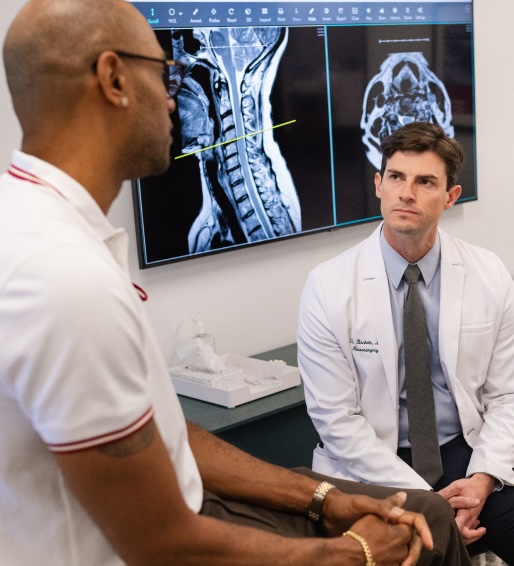
Conservative care may not be sufficient when there is significant neurological compromise, progressive weakness, spinal instability, or structural damage that cannot be meaningfully addressed without surgical intervention. In those cases, Dr. Beckett will outline the surgical options most appropriate for your specific condition.

The most important step is an accurate diagnosis. Treatment that isn’t matched to the correct source of symptoms — whether surgical or non-surgical — is unlikely to provide lasting relief.

Conservative Treatment Options

These therapies are designed to relieve symptoms and improve function without surgery.

Medications

Targeted use of anti-inflammatory, muscle relaxant, or neuropathic medications to manage acute or chronic spine-related symptoms. Medications are typically used as part of a broader treatment plan rather than as a standalone long-term solution.

Activity Modification & Structured Rehabilitation

Guided adjustments to daily movement, posture, and activity levels to reduce mechanical stress on the spine and support recovery. When combined with physical therapy, activity modification helps patients build sustainable habits that protect long-term spinal health.

Physical Therapy

Structured rehabilitation programs guided by a physical therapist designed to improve strength, flexibility, and spinal stability. Physical therapy targets the underlying movement patterns and muscle imbalances that contribute to spine-related pain.

Epidural Steroid Injections

Image-guided injections that deliver anti-inflammatory medication directly to the affected area of the spine. Epidural steroid injections are particularly effective for nerve-related pain, including radiating arm or leg symptoms caused by disc herniation or spinal stenosis.

Facet Joint Injections

Targeted injections into the small joints that connect the vertebrae, used to diagnose and relieve facet-mediated pain. Facet pain is a common but often overlooked source of chronic neck and back discomfort, particularly in patients with degenerative joint changes.

Am I A Candidate For
Conservative Treatment?

Most patients begin with non-surgical treatment before considering surgery. Determining the right approach depends on symptoms, imaging findings, and how the condition is affecting daily life.

Conservative care may be recommended when:

• Symptoms are mild to moderate
• There is no significant instability or neurological deficit
• Imaging findings support non-surgical management
• The goal is to improve function without surgery

If symptoms persist or progress despite treatment, surgical options may then be considered.

Get the Right Diagnosis Before Choosing Treatment

Effective spine care begins with identifying the source of your symptoms. Whether treatment is non-surgical or surgical, the right plan starts with a precise evaluation.

TESTIMONIALS FROM OUR PATIENTS

Insights, Press & Case Highlights

Schedule A
Consultation

Take the next step toward better spine
health. Schedule a consultation with
Dr. Beckett today.