

Restoring Function After Severe Cervical Cord Compression
A 70-year-old patient presented with progressive hemiparesis over several months, representing a significant functional decline for a previously independent individual. His symptoms continued to worsen, impacting both mobility and daily activity.
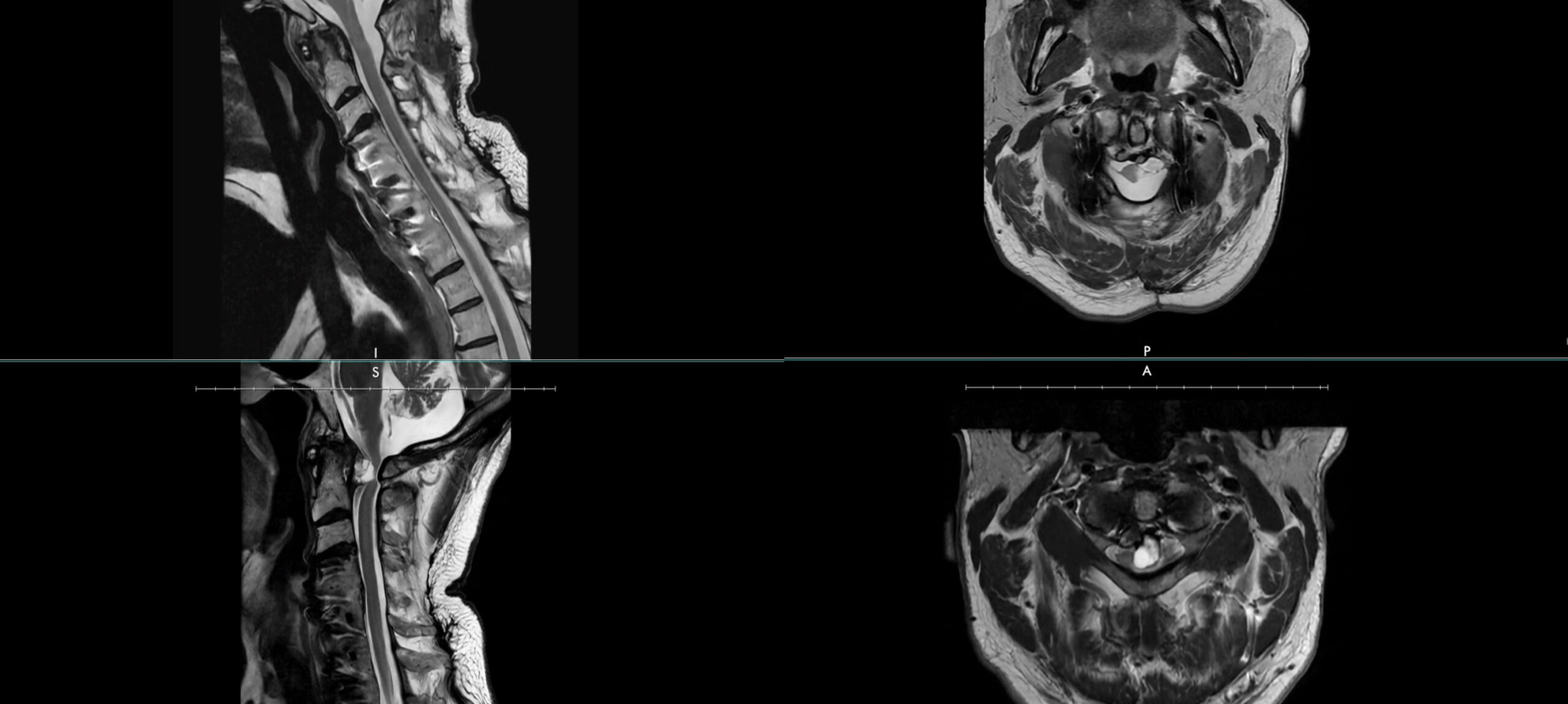
Advanced imaging revealed a C1–2 intradural cyst causing severe spinal cord compression at the craniocervical junction—a rare and technically complex pathology given its location and proximity to critical neurovascular structures.
The patient had previously consulted with multiple surgeons and was advised that surgical intervention carried substantial risk with uncertain benefit. In several instances, conservative management was recommended due to the complexity of the case, the degree of cord compression, and considerations related to age.
However, given the progressive nature of his neurologic decline, non-operative management was unlikely to alter the course of his condition. After careful evaluation, a surgical approach was recommended to address the underlying compression.
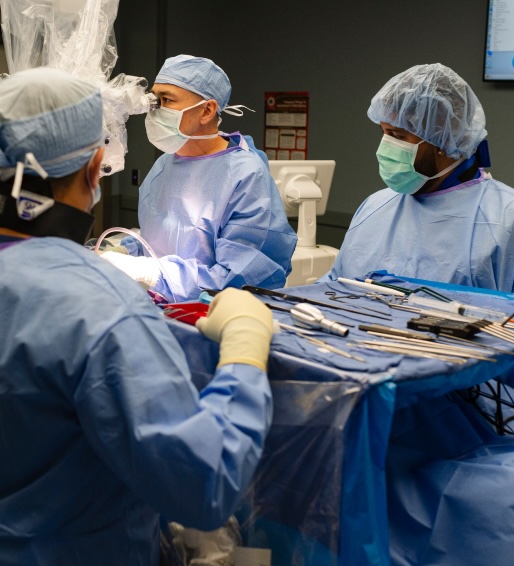
The patient underwent microsurgical cyst resection with craniocervical stabilization. The procedure required precise microsurgical technique to safely access the lesion, decompress the spinal cord, and preserve remaining neurologic function while maintaining structural stability at the craniocervical junction.
At six months postoperatively, the patient demonstrated substantial functional recovery. He is now ambulating independently without assistive devices, representing a meaningful improvement from his preoperative deficits. Sensory function has improved, and follow-up imaging confirms complete resection of the cyst with adequate decompression of the spinal cord.
This case highlights the importance of careful patient selection and thorough evaluation in complex spine pathology. Even in cases where initial prognosis may appear unfavorable, appropriately selected surgical intervention can result in meaningful neurologic recovery. Age alone should not preclude consideration of treatment when the underlying condition is amenable to correction.