

Adjacent Segment Degeneration Following Prior Fusion
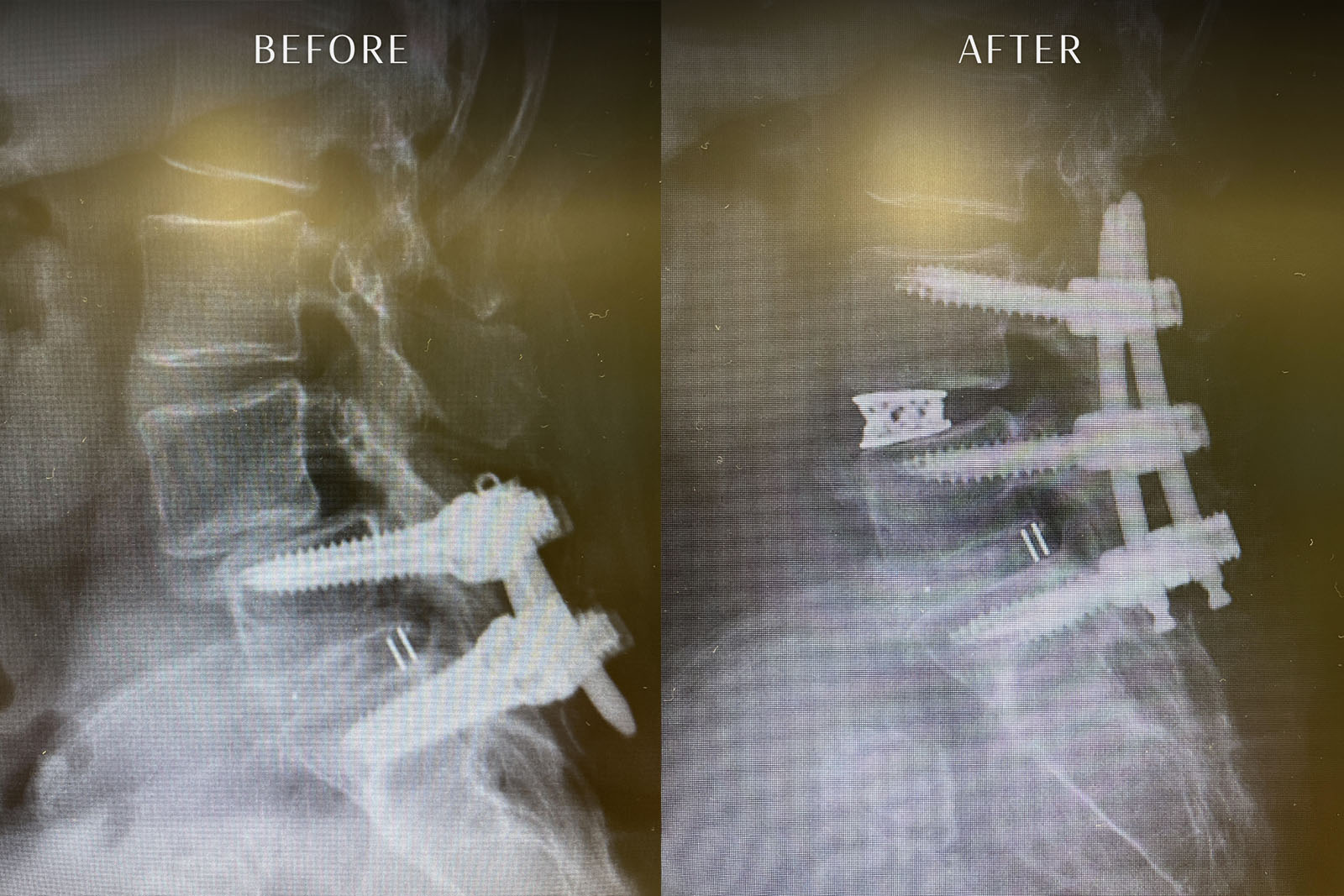
A 63-year-old patient with a history of lumbar fusion performed ten years prior presented with new-onset back and leg pain.
Imaging revealed adjacent segment degeneration above the prior fusion, with progressive instability, disc deterioration, and vertebral slippage contributing to symptomatic nerve compression.
This pattern, while not uncommon, reflects the long-term biomechanical impact of fusion, where increased stress is transferred to neighboring segments over time.
Given the severity of degeneration and clinical correlation with her symptoms, we proceeded with a minimally invasive fusion at the affected level.
The patient was discharged the following morning.
At one-year follow-up, she reports complete resolution of pain, no residual radiculopathy, and return to an active lifestyle.
This case highlights the importance of recognizing adjacent segment disease as a treatable condition—and the role of precise, targeted intervention in restoring function even years after prior surgery.