


How UCLA neurosurgeons are transforming spine care
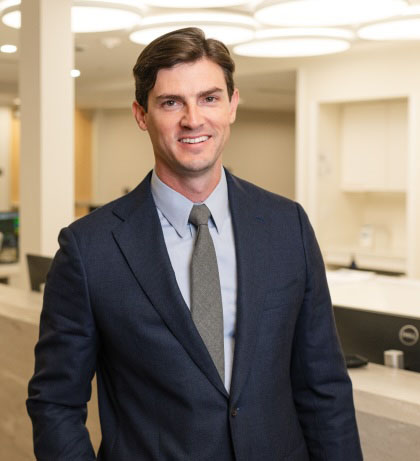
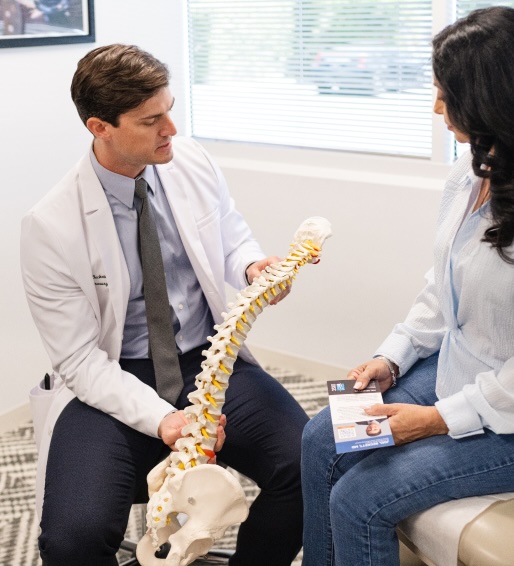
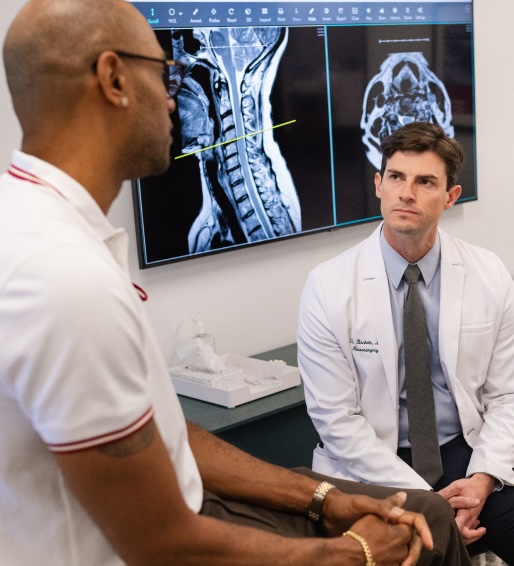
In his clinical practice, Joel Beckett, MD, sees patients for 15-minute appointments. He treats symptoms of herniated discs, spinal cord injuries, spinal stenosis, and other diagnoses, but he’s most interested in what’s going on with patients outside of the office.
“What I really want to know about a patient, I’m not going to be able to capture it in that appointment,” says Dr. Beckett, a Health Sciences assistant clinical professor in the Department of Neurosurgery. “What I want to see is you walking out and about.”
To simulate everyday movement with more accuracy, every patient who comes through Dr. Beckett’s clinic has their walk and dexterity recorded. Then, artificial intelligence is used to measure things like gait and slight deviations in movement, which is compared to their movement during a follow-up appointment. This helps track a patient’s progress and guide clinical decisions.
“There is, for example, a common disease process called cervical myelopathy. The most aggressive mentality is that even if you have a bit of spinal compression, some surgeons will recommend you have surgery right away. We don’t often know what the future holds for very mild cervical myelopathy,” Dr. Beckett says. “Instead, let’s monitor it.”
The long-term goal will be to develop and arm patients with a HIPAA-protected smartphone app that will use artificial intelligence to track small changes in bodily movements. The app will allow a patient (or a caregiver) to video record their own gait and other movements from the privacy and comfort of their own home. The data will then be sent directly to Dr. Beckett who can measure and assess the patient’s progress — a so-called “remote neurologic exam.”
The patient will no longer have to come into the clinic for regular appointments, and Dr. Beckett and his team will be able to collect population-level data on the progression of different diagnoses.
“We’ll be able to figure out, say, what the gait of someone with a herniated disk really looks like over time,” Dr. Beckett says. “The textbooks talk about it in a high-brow, academic sense, but we don’t have population-wide, high-quality data.”
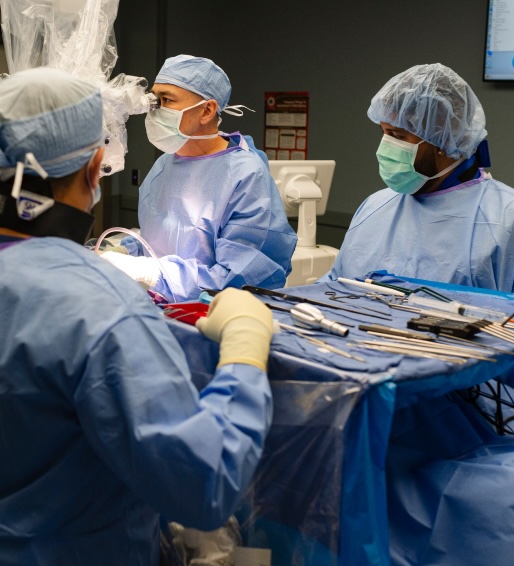
Dr. Beckett says that the strength of UCLA’s entire spine surgery program is having a diverse, research-oriented group of clinicians who know not only when to recommend surgery – but also when they can prevent it.
“When you come to UCLA neurosurgery, you’re truly getting the group opinion that has your best interest in mind,” he says.
Read the full article on UCLA Health.