


Clarity Trial for Chronic Low Back Pain
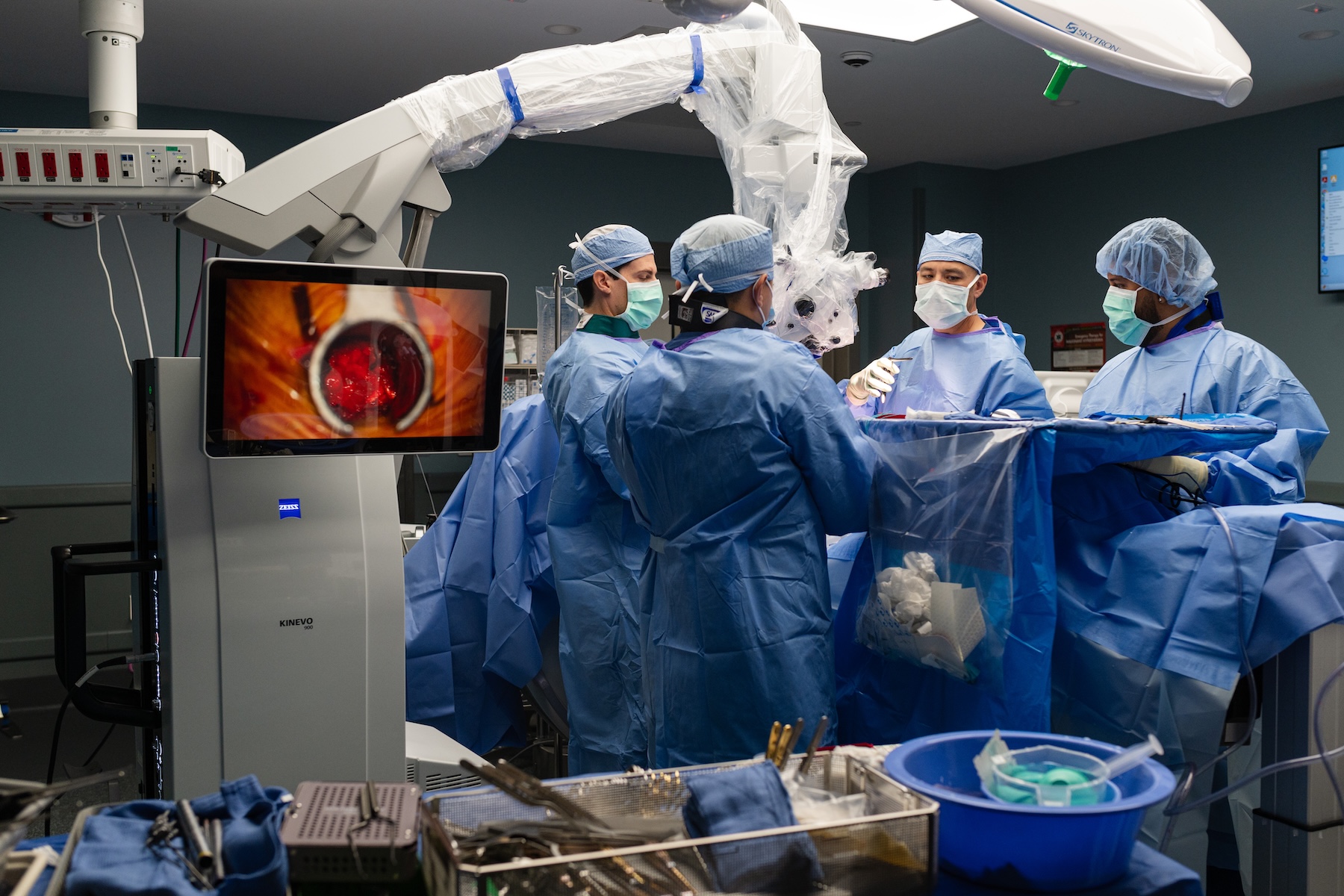
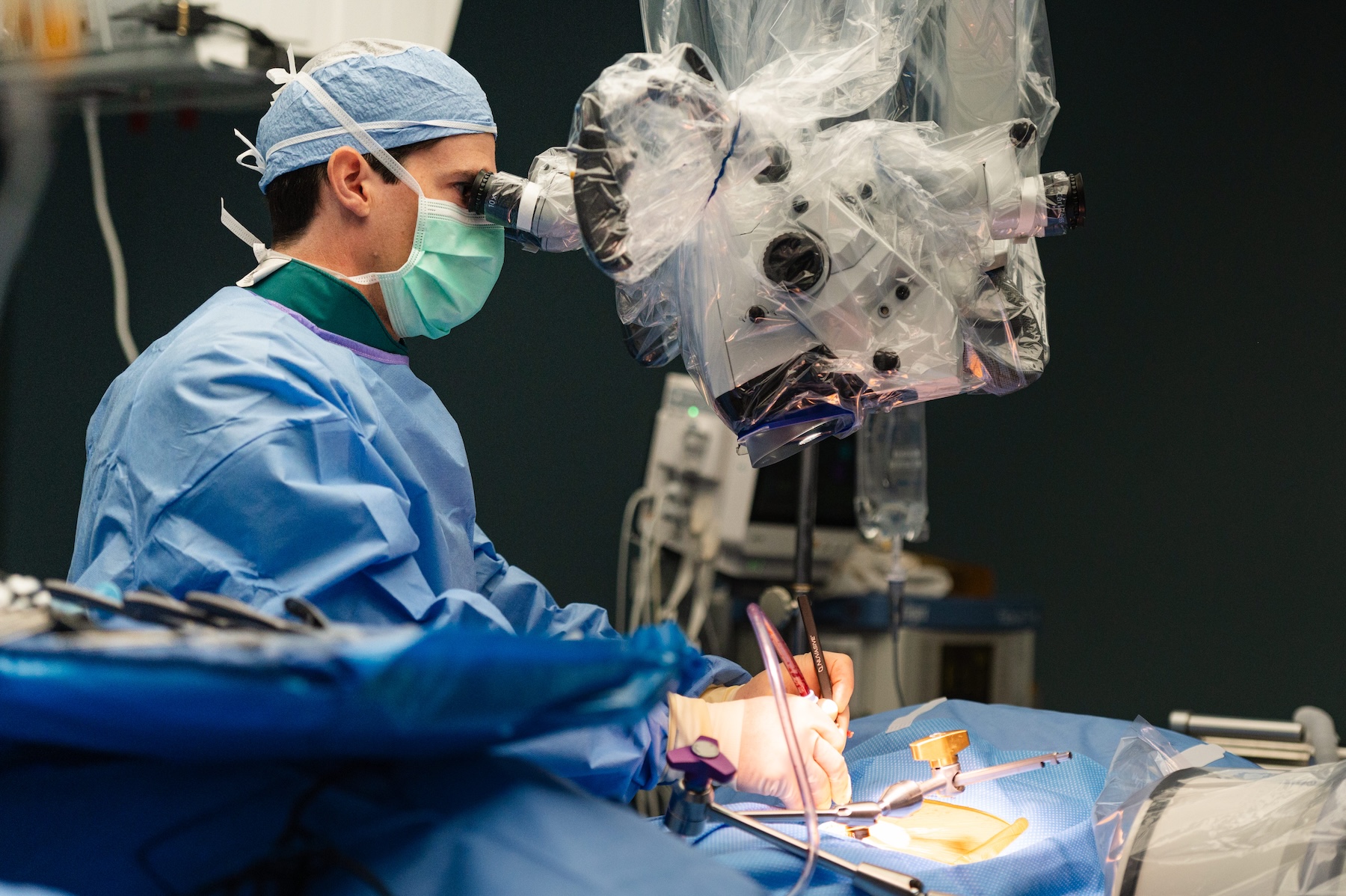
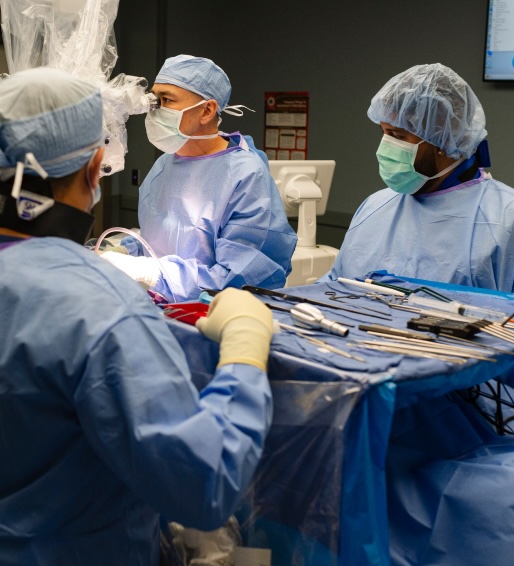
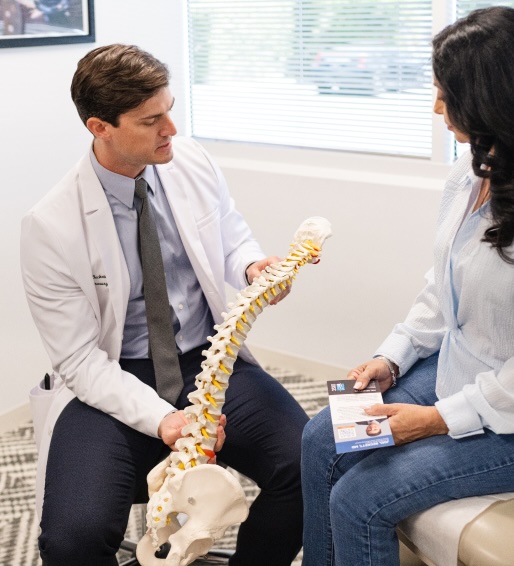
The CLARITY Trial is a research study for adults with disc-related low back pain who are already planning to have lumbar spine surgery with their doctor. The clinical study is designed to evaluate whether NOCISCAN® can help improve surgical outcomes for patients with discogenic low back pain. NOCISCAN® is the first, evidence-supported, SaaS platform to leverage MR Spectroscopy (MRS) to noninvasively help physicians distinguish between painful and nonpainful discs in the spine.
The study will compare outcomes in participants whose surgeons have access to the NOCISCAN® report before surgery with outcomes in participants whose surgeons do not have access to the report before surgery. This will help researchers learn how use of the NOCISCAN® report may help guide surgical planning and improve how participants do after surgery.
The study team will review each person’s health history, imaging, pain scores, and other study requirements to determine who may qualify.
Is there a placebo group?
No. This study does not include a placebo surgery or sham surgery group.
What is the purpose of this trial?
The purpose of the CLARITY Trial is to learn how information from NOCISCAN® may help doctors plan surgery for people with disc-related low back pain. NOCISCAN® is the first, evidence-supported, SaaS platform to leverage MR Spectroscopy (MRS) to noninvasively help physicians distinguish between painful and nonpainful discs in the spine.
In this study, researchers will compare results between two groups of participants. In one group, the surgeon will review the NOCISCAN® report before surgery. In the other group, the surgeon will not review the NOCISCAN® report before surgery.
By comparing these groups, researchers hope to learn how use of the NOCISCAN® report before surgery is associated with differences in recovery, pain, function, or other outcomes after surgery.
What prior data suggests that NOCISCAN® is safe?
NOCISCAN® uses information from an MRS technology and does not involve a drug or injection. Previous studies have not identified any major safety issues with NOCISCAN®.1 NOCISCAN® is generally well-tolerated.
What is the difference between MRI and MRS?
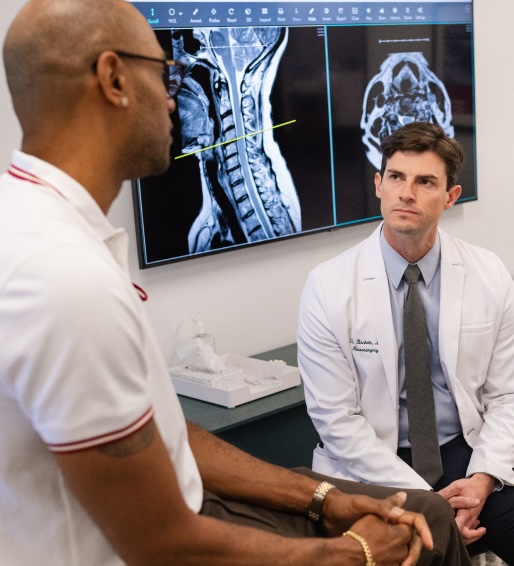
An MRI of the lumbar spine provides detailed pictures of the anatomy, showing structures such as the discs, bones, nerves, and surrounding soft tissues to help identify problems like herniated discs, spinal stenosis, or fractures. Magnetic Resonance Spectroscopy (MRS) goes a step further by analyzing the chemical makeup of the tissue rather than just its appearance, providing information about tissue health and metabolism that cannot be seen on a standard MRI. In simple terms, MRI shows what the spine looks like, while MRS helps reveal what a standard MRI cannot show—chemical-based pain and structural integrity.
What evidence suggests that NOCISCAN® is effective?
A previous clinical study evaluated NOCISCAN® in 78 patients with disc-related low back pain who later had lumbar spine surgery.1 NOCISCAN® was used to assign disc-specific scores based on MR spectroscopy findings. Researchers then compared outcomes in patients whose surgery matched the discs identified by NOCISCAN® with outcomes in patients whose surgery did not match the NOCISCAN® findings.
In that study, surgical success was defined as at least a 15-point improvement on the Oswestry Disability Index, a questionnaire that measures how much back pain affects daily function. Success rates were higher when surgery matched the NOCISCAN® findings: 88% versus 62% at 6 months, 91% versus 56% at 12 months, and 85% versus 63% at 24 months. The matched-surgery group also had larger average improvements in disability scores at 6, 12, and 24 months.
The clinical study is designed to evaluate how NOCISCAN® can help improve surgical outcomes for patients with discogenic low back pain.
Are You a Good Fit for This Trial?
This trial is for adults aged 18-70 with discogenic low back pain, who have not improved after at least 6 months of non-surgical treatments. They must be planning to undergo spine surgery using FDA-approved devices and have specific scores on pain and disability assessments. Pregnant individuals or those unable to follow the study protocol are excluded.
Inclusion Criteria
To qualify, you must meet all of these criteria:
- You are a skeletally mature male or female (non-pregnant) adult aged 18 to 70 years, inclusive
- You planned to have surgery for back pain prior to considering this study
- Your back pain severely limits your daily activities.
- You are willing to sign the IRB-approved Informed Consent Form
- You have tried non-surgical treatments for over 6 months without relief OR your surgeon determines you need urgent surgical treatment
- You have back pain from disc degeneration in your lower back that was confirmed by MRI
- Your back pain is worse than your leg pain
- You are mentally and physically able to follow the study’s requirements
Exclusion Criteria
You cannot participate if any of these things apply to you:
- You cannot undergo a standard lumbar MRI exam
- You are currently receiving worker’s compensation or are involved in any litigation for personal injury, medical negligence, trauma, or worker’s compensation
- You have a primary spine diagnosis other than degenerative disc disease at the involved level, such as pain mainly from the facet joints or sacroiliac joint
- Your spine condition is not due to degenerative disc disease
- You have weakness in your legs
- Your spinal canal is abnormally narrow
- You have had surgery on your lower back before (though some exceptions are allowed)
- You have certain spine findings on imaging, such as more than mild vertebral slippage, a pars fracture, spondylolysis, lumbar scoliosis above the study limit, prior fracture or trauma from L1 to L5, or abnormal forward curvature of the lower back
- Your spine surgery is to treat more than two spine levels
- Your surgery will involve more than 2 levels of my lower back
- You have an uncontained lumbar disc herniation or disc extrusion
- You have a significant narrowing of your spinal canal
- You are pregnant, at risk of becoming pregnant, or breastfeeding during the study
- Your BMI is over 40
- You have a chronic disease, disorder, or condition that could interfere with your participation in the study
CLARITY Trial Timeline
Screening
The study team reviews your health information to see whether you qualify for the study.
Time: About 2 to 4 weeks
Pre-Surgery Assessment
You will have a NOCISCAN® test before surgery. This test helps evaluate discs in the lower back and may help identify which discs are related to your pain.
Time: About 1 to 2 weeks before surgery
Treatment
If you qualify and decide to take part, you will have surgery for disc-related low back pain as part of the study.
Time: Your surgeon and you agree to your day of surgery
Follow-Up
After surgery, the study team will check on your health and recovery at several follow-up visits.
Time: Up to 24 months
Visits: About 3, 6, 12, and 24 months after surgery
Do I have to take part in this study?
No. Taking part in this study is your choice. You do not have to join the study to receive care for your back pain.
Your decision will not affect your regular medical care, your relationship with your doctor, or your access to surgery or other treatment options. If you choose not to take part, your doctor will discuss other options with you based on your medical needs.
If you decide to join the study, you can change your mind later. You may leave the study at any time. The study team will explain what this means for your follow-up care and any information already collected as part of the study.
Will I be paid for participating in the CLARITY trial?
Your regular medical care, including the surgery you were already planning with your doctor, may be billed to you or your insurance in the usual way. Study-related procedures may be covered by the study when they are required only for research purposes. The study team will tell you which procedures, if any, may be billed to you or your insurance and which are paid for by the study.
You will be paid for taking part in this study. You may also be reimbursed for certain study-related expenses, such as travel or parking. The study team will review these details with you during the consent process.
Will I benefit from participating in the CLARITY trial?
You may or may not benefit from taking part in this study. The information collected in this study may help researchers better understand how NOCISCAN® is useful for surgical planning in people with disc-related low back pain. This knowledge may help future patients.
For more information, please contact:
Nicole Phillips, CCRC
Clinical Research Coordinator for Todd H. Lanman, MD, FACS
References
1. Gornet MF, Eastlack RK, Peacock J, Schranck FW, Lotz JC. Magnetic resonance spectroscopy (MRS) identification of chemically painful lumbar discs leads to improved 6-, 12-, and 24-month outcomes for discogenic low back pain surgeries. Eur Spine J. Jun 2023;32(6):1973-1984. doi:10.1007/s00586-023-07665-w