

C1–2 Intradural Cyst with Progressive Hemiparesis
A 70-year-old patient presented with progressive hemiparesis over several months, resulting in significant functional decline from a previously independent baseline.
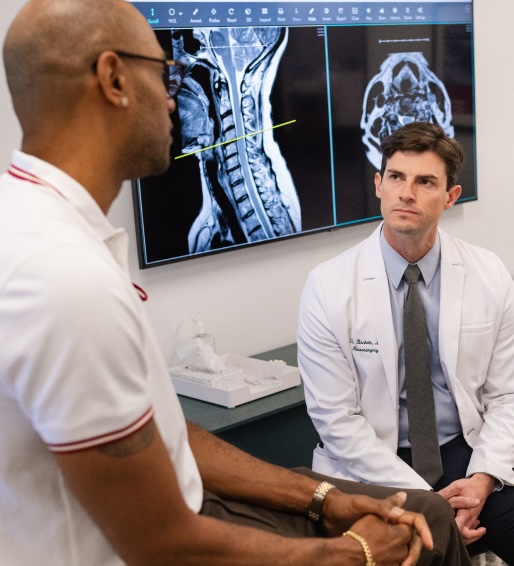
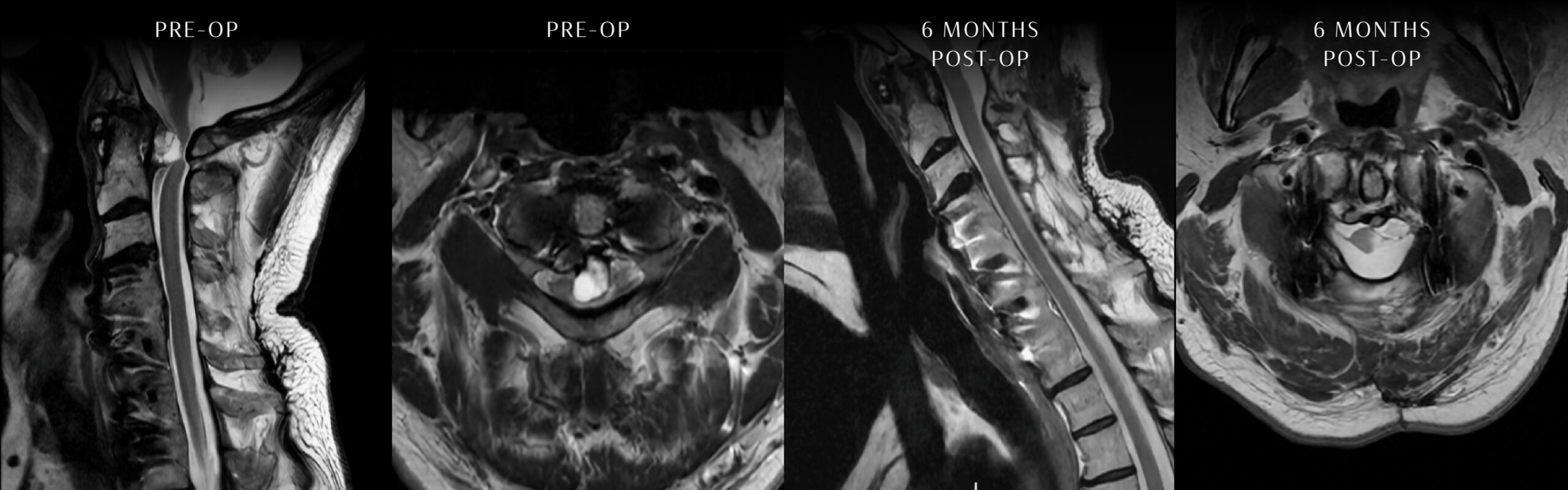
Advanced imaging revealed a C1–2 intradural cyst causing severe spinal cord compression at the craniocervical junction—a rare and technically complex pathology given its proximity to critical neurovascular structures.
The patient had previously been evaluated elsewhere and advised against surgical intervention due to the perceived risks and uncertain benefit.
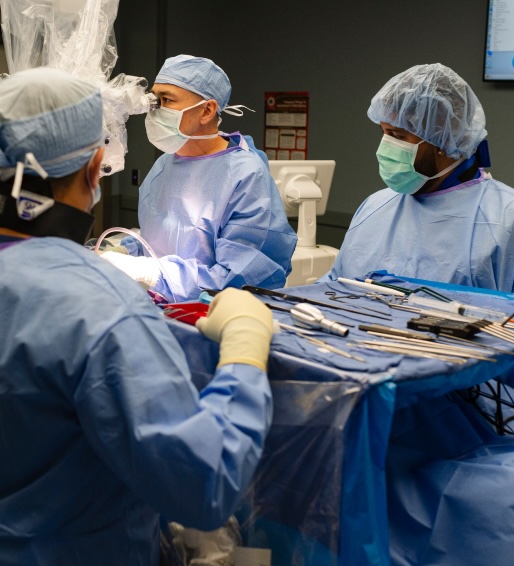
Given the progressive neurologic decline and the underlying compressive pathology, surgical treatment was recommended. The patient underwent microsurgical cyst resection with craniocervical stabilization.
The procedure required meticulous technique to safely decompress the spinal cord while preserving surrounding structures and maintaining stability.
At six months postoperatively, the patient demonstrated substantial functional recovery. He is now ambulating independently without assistive devices, with meaningful improvement in both motor and sensory function. Follow-up imaging confirms complete cyst resection and adequate decompression.
This case highlights the importance of individualized evaluation in complex spine pathology. Even in higher-risk scenarios, carefully selected surgical intervention can lead to meaningful neurologic recovery when the underlying condition is amenable to treatment.