

Advances in Motion Preservation Technology: What Today’s Spine Patients Should Know
For decades, spinal fusion has been one of the most dependable treatments for conditions such as degenerative disc disease, herniated discs, spinal instability, and nerve compression that does not respond to conservative care. Fusion remains the right operation when stability, deformity, or other structural factors require a spinal segment to be immobilized. But it also involves a permanent trade-off: once fused, that level can no longer move.
Motion-preserving spine surgery gives appropriately selected patients another option. Instead of automatically eliminating movement, procedures such as artificial disc replacement are designed to relieve nerve compression, address the damaged disc, and preserve more natural function at the treated level. Maintaining motion may also help the spine distribute movement and mechanical stress more naturally over time.
Dr. Joel Beckett approaches every case with a “motion first, fusion last” philosophy—but that does not mean avoiding fusion when it is necessary. It means carefully evaluating whether motion can be safely preserved before committing a patient to permanent immobilization. The goal is not to choose the newest procedure. It is to select the least disruptive treatment that resolves the problem, protects healthy anatomy, and supports the way the patient’s spine needs to function for years to come.
What Does “Motion Preservation” Mean in Spine Surgery?
Motion preservation refers to surgical treatments designed to address a damaged or painful spinal level while maintaining movement there, rather than eliminating it. The spine is built to move, and each level contributes to how you bend, rotate, and absorb load through daily activity. When a level is fused, that movement stops permanently at that segment.
Fusion is the right answer when the spine genuinely needs stabilization. But when a patient’s anatomy, alignment, and diagnosis support it, a motion-preserving approach may treat the source of symptoms, such as nerve compression or disc disease, while keeping that segment functional.
The goals are practical:
- Relieve pressure on compressed nerves or the spinal cord
- Reduce neck or back pain caused by disc degeneration or herniation
- Maintain flexibility and more natural movement mechanics
- Help reduce mechanical stress on the spinal levels above and below the treated segment
- Support a return to daily activity, work, and movement with less long-term restriction
Why Motion Preservation Technology Matters
The spine is not a single structure. It is a system. Each disc, joint, ligament, and vertebra works together to allow bending, rotation, and shock absorption. When one level is fused, that coordinated movement does not disappear; it shifts. The levels above and below the fusion may take on more mechanical load over time, which can contribute to accelerated wear at those segments.
Motion-preserving procedures may help reduce that transfer of stress in appropriately selected patients. This does not make them the right choice for everyone, but it does make them worth evaluating carefully, particularly for active adults, younger patients, and patients who want to address their symptoms while protecting as much long-term function as possible.
Conditions where motion preservation is commonly considered include herniated discs, degenerative disc disease, cervical nerve compression, and select cases of spinal stenosis. In each case, the question is not whether motion preservation sounds better than fusion. The question is whether the patient’s anatomy, alignment, diagnosis, and long-term goals support preserving motion safely.
Cervical Disc Replacement: One of the Best-Known Motion Preservation Options
Cervical disc replacement is one of the most established motion preservation procedures in spine surgery. When a damaged or herniated cervical disc causes nerve or spinal cord compression, the traditional surgical answer has often been to remove the disc and fuse the two vertebrae together. Cervical disc replacement takes a different approach. The damaged disc is removed, and an artificial disc implant is placed in its position. The goal is to relieve pressure on the nerve or spinal cord while maintaining motion at that level.
This procedure may be appropriate for patients with:
- Cervical disc herniation causing nerve compression
- Arm pain, numbness, tingling, or weakness that follows a specific nerve pathway
- Degenerative disc disease in the neck with symptoms that have not improved after appropriate conservative care
- Symptoms that clearly match imaging findings and neurologic exam results
Cervical disc replacement is not a universal alternative to fusion. Candidate selection depends on disc height, spinal alignment, facet joint health, the degree of degeneration, and whether the affected level is stable enough to support an implant. When those factors align, it offers a path to meaningful nerve relief with more of the neck’s motion preserved.
Motion Preservation Is Not Just About the Implant
The most important advance in spine surgery is not any single implant or technique. It is the ability to match the right procedure to the right patient. Motion preservation technology is only useful when the patient’s anatomy, diagnosis, alignment, and goals support it. Used in the wrong setting, a motion-preserving implant may fail to solve the problem or create new ones.
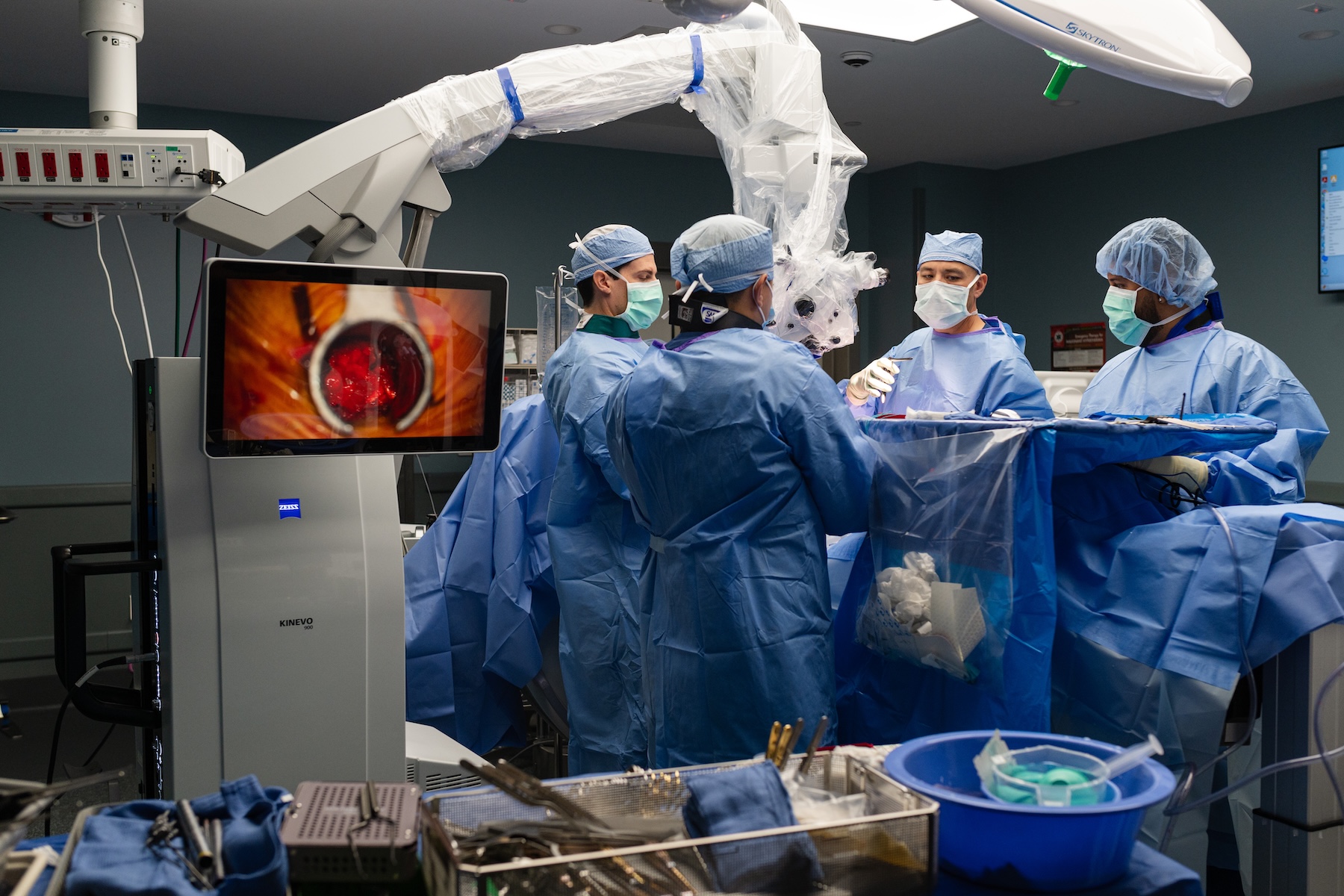
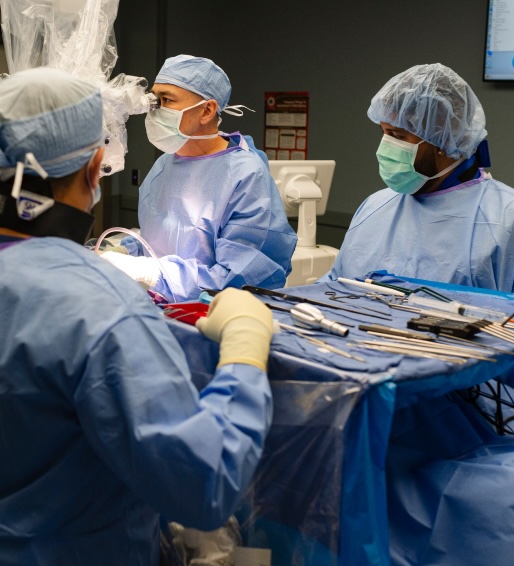
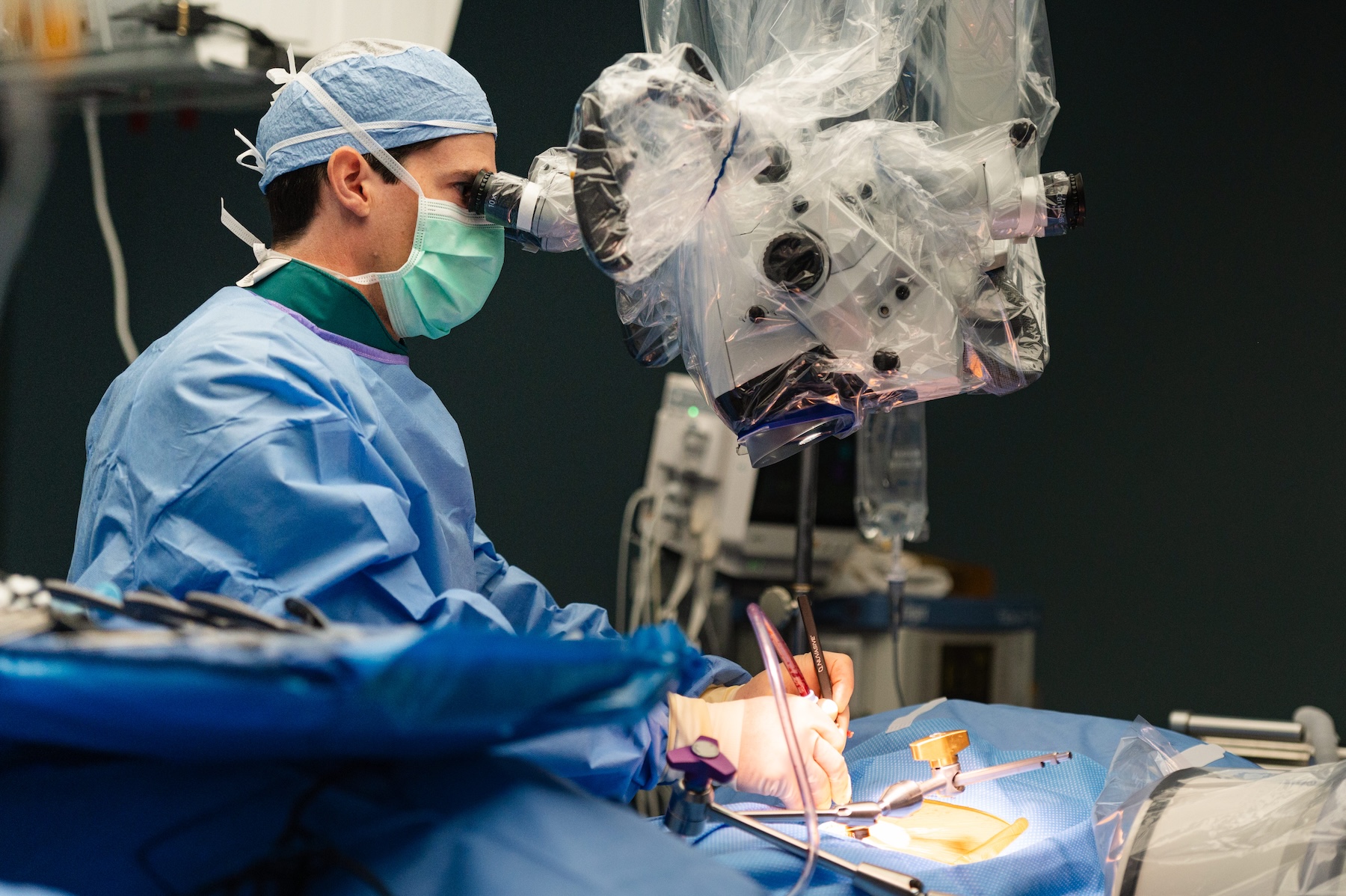
When appropriate, motion-preserving procedures may also be performed using minimally invasive techniques. These approaches can limit disruption to surrounding muscles, soft tissue, and normal spinal structures while still addressing the source of nerve compression or disc-related disease. When motion preservation and minimally invasive access both fit the case, the goal is to reduce surgical disruption while protecting more of the spine’s natural architecture.
For Dr. Beckett, the decision starts with a careful evaluation of the full clinical picture:
- MRI and CT findings to assess disc condition, nerve compression, and bone quality
- Spinal alignment and overall mechanical balance
- Disc height and facet joint health at the affected level
- Severity and location of nerve or spinal cord compression
- History of previous spine surgery and its effect on current anatomy
- Activity level, occupation, and long-term mobility goals
A motion-preserving procedure is recommended only when that full picture supports it. Not because it is newer, but because it is right for that patient.
When Fusion May Still Be the Better Option
Motion preservation is not the right answer for every patient and choosing it in the wrong setting can compromise the result. When the spine needs genuine structural stabilization, fusion remains one of the most reliable procedures available — and the more appropriate choice.
Spinal fusion is often still recommended when:
- Severe spinal deformity requires correction and long-term structural support
- Advanced degeneration has compromised disc height, alignment, or joint integrity beyond what a motion-preserving implant can address
- Spinal instability — whether from degeneration, trauma, or prior surgery — makes preserving motion at that level unsafe
- Fractures or certain spinal tumors require rigid stabilization
- Complex or revision spine surgery involves anatomy that no longer supports a motion-preserving approach
Is Motion Preservation Right for You?
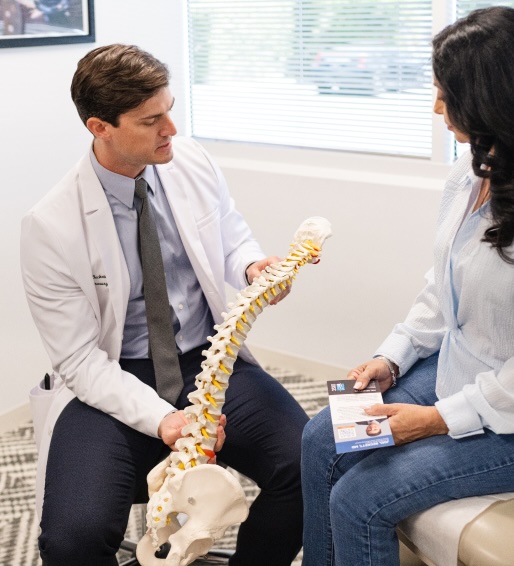
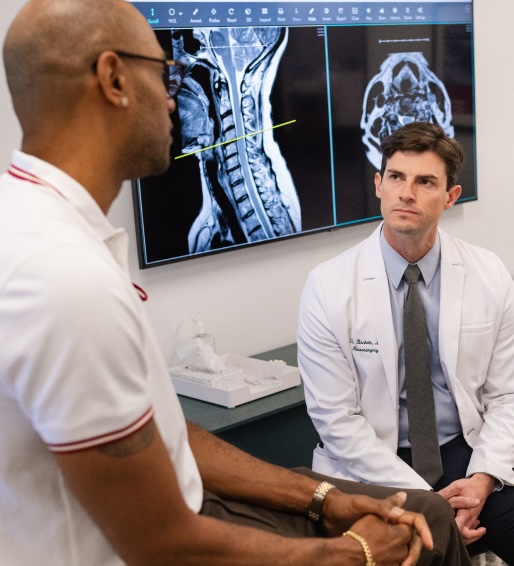
If you are experiencing neck or arm pain, numbness, weakness, a herniated disc, degenerative disc disease, or spinal stenosis, the first step is a comprehensive evaluation. Imaging is important, but it does not determine treatment on its own. Your symptoms, neurological examination, spinal alignment, anatomy, activity level, and long-term goals must all be considered when deciding whether motion preservation, fusion, or nonsurgical care is the most appropriate path.
Advances in implant design, imaging, navigation, and patient selection continue to expand what motion-preserving spine surgery may offer. For appropriately selected patients, these developments can provide additional ways to address the underlying condition while maintaining more natural movement and function.
Dr. Beckett does not begin with a preferred procedure. He begins with the individual patient. His “motion first, fusion last” philosophy means preserving healthy anatomy and movement whenever it can be done safely and effectively—while recognizing when fusion or another approach will provide the more durable result. The objective is always the same: resolve the problem with the least disruption necessary and protect the long-term health of the spine.
To learn whether motion-preserving spine surgery may be appropriate for your condition, schedule a consultation with Dr. Beckett in Beverly Hills, Marina del Rey, or Las Vegas.