


Failed Back Surgery Options: What Can Be Done When Pain Continues?
When pain persists or returns after spine surgery, understanding why is the first step toward finding relief. New or ongoing symptoms deserve a fresh evaluation to determine whether further surgery, nonsurgical treatment, or a combination of approaches offers the best path forward.
Possible causes include recurrent nerve compression, a fusion that has not healed, hardware complications, instability, or pain arising from another spinal level, the facet joints, or the sacroiliac joints. Scar tissue may contribute in some cases, but its presence on imaging does not necessarily explain the pain. The priority is to identify what is causing the symptoms now.
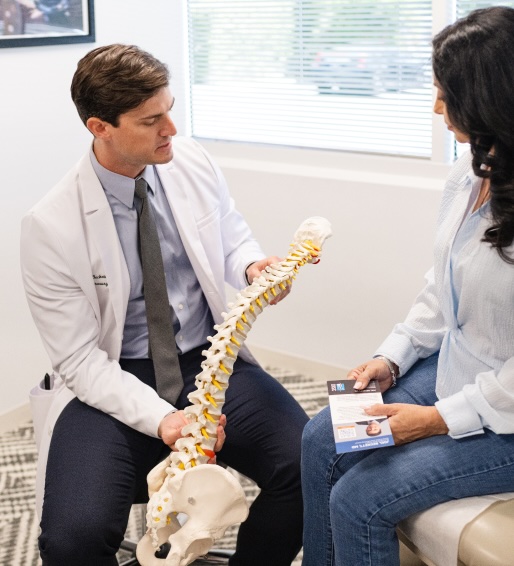
At Beckett NeuroSpine, board-certified, dual fellowship-trained neurosurgeon Dr. Joel Beckett reviews the original diagnosis, prior procedures, current imaging, and the patient’s symptoms and functional goals. His approach combines careful diagnosis with individualized planning to determine whether revision spine surgery can address a correctable problem or whether rehabilitation and targeted pain management may be more appropriate. Each recommendation prioritizes lasting function and the least disruptive treatment suited to the patient’s condition.
What Is Failed Back Surgery Syndrome?
Failed back surgery syndrome describes persistent or recurrent back or leg pain after spine surgery, sometimes accompanied by numbness, weakness, or reduced mobility. Despite its name, it does not necessarily mean the original procedure was performed incorrectly. Pain may continue despite a technically successful operation or return after an initial period of improvement. A newer term, persistent spinal pain syndrome type 2, describes this ongoing pain without implying surgical error.
The term does not identify a single cause or treatment. Evaluation may reveal a structural problem, persistent nerve irritation, changes at another spinal level, or a separate pain source. Effective care begins with identifying which factors contribute to the patient’s current symptoms.
Why Can Pain Continue After Spine Surgery?
Persistent or recurrent pain after spine surgery may have several contributing causes. Evaluation focuses on determining whether symptoms arise from nerve compression, a structural problem, joint or muscle pain, or another condition. Imaging findings must be considered alongside symptoms and examination findings to identify the likely source.
Possible causes include:
- Incomplete nerve decompression
- Recurrent disc herniation
- Symptomatic scar tissue or adhesions around a nerve
- Persistent or new nerve injury
- Failed spinal fusion or nonunion
- Loose, damaged, or misplaced hardware
- Spinal instability
- Symptomatic adjacent segment disease
- Progression of the original spine condition
- A pain source that was not identified before surgery
How Is Persistent Pain Evaluated?
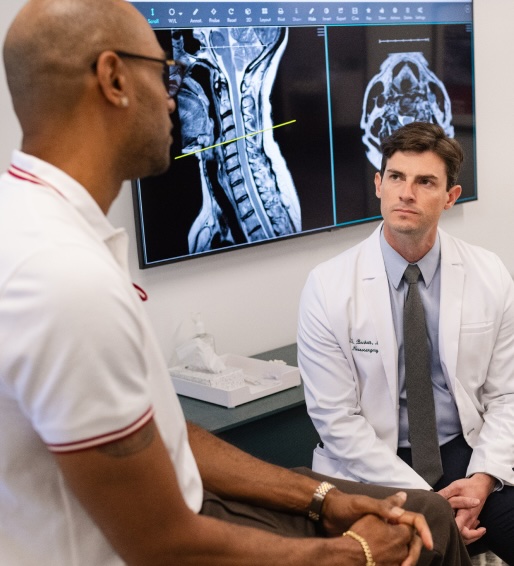
Evaluation begins with a careful review of the patient’s symptoms, prior surgery, operative records, and physical examination. X-rays, MRI, CT, or other tests may then help determine whether nerve compression, instability, nonunion, hardware problems, or another structural issue matches the patient’s current symptoms.
Non-Surgical Options After Back Surgery
Persistent symptoms after spine surgery do not automatically mean another operation is necessary. Depending on the diagnosis, non-surgical treatment may include:
- Targeted physical therapy
- Activity modification
- Anti-inflammatory or nerve pain medications
- Image-guided spinal injections
- Other non-surgical pain management approaches
- Careful monitoring when symptoms are stable
When Is Revision Spine Surgery Considered?
Revision surgery may be appropriate when a patient’s symptoms and imaging identify a clear, correctable problem, such as:
- Persistent spinal stenosis or nerve compression
- Recurrent disc herniation
- Failed fusion
- Spinal instability
- Hardware complications
- Progressive deformity
- Adjacent segment disease
What Types of Revision Procedures May Be Used?
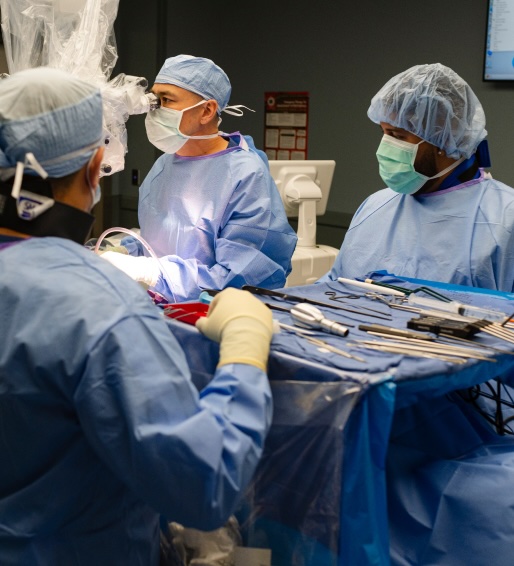
Revision spine surgery is tailored to the cause of the current symptoms, the patient’s anatomy, and the procedures previously performed. The aim is to address a correctable problem while protecting nerve function, maintaining or restoring stability, and preserving motion where appropriate.
Depending on these findings, revision options may include:
- Revision decompression
- Discectomy
- Removal or replacement of hardware
- Extension or repair of a spinal fusion
- Correction of spinal alignment
- Artificial disc replacement in carefully selected patients
When appropriate, some revision procedures can be performed with minimally invasive techniques to limit disruption to surrounding tissues and potentially result in a faster early recovery.
Why a Second Opinion Can Be Valuable
Revision spine surgery can be more complex than an initial procedure because scar tissue, altered anatomy, and existing implants influence the surgical approach and risks. A second opinion provides a fresh assessment of the diagnosis, whether further surgery is likely to help, and whether nonsurgical care or a less invasive procedure may be appropriate.
It also helps patients compare recommendations and understand the expected benefits, limitations, risks, and recovery so they can make an informed decision about their next steps.
Frequently Asked Questions
Does continued pain mean my back surgery failed?
Not necessarily. Healing, nerve recovery, symptomatic scar tissue, or another untreated condition may contribute to ongoing symptoms.
How long should pain last after back surgery?
Recovery varies by procedure, and the condition treated. Pain that worsens or persists beyond the expected recovery period should be reassessed. New weakness warrants prompt evaluation. Rapidly worsening weakness, new difficulty urinating or loss of bladder or bowel control, or numbness around the groin or saddle area requires emergency assessment.
Can failed spinal fusion be repaired?
In some cases, revision fusion may restore stability and address a nonunion or hardware problem.
Is revision spine surgery more difficult?
Revision procedures can be more complex because of scar tissue, altered anatomy, and previous implants.
Can minimally invasive surgery be used for a revision?
Some revision procedures can be performed using minimally invasive techniques, depending on the anatomy and surgical goal.
Personalized Care for Persistent Pain After Spine Surgery with Dr. Joel Beckett
Persistent pain after spine surgery deserves a clear understanding of its cause and a thoughtful plan for moving forward. Dr. Joel Beckett, a board-certified, dual fellowship-trained neurosurgeon, reviews your original diagnosis, prior procedures, current imaging, and functional goals to determine which treatment best fits your needs.
When revision surgery is appropriate, his expertise in complex reconstruction, minimally invasive techniques, and motion preservation informs a plan tailored to the specific problem. Treatment may involve relieving nerve compression, repairing a fusion that has not healed, or restoring spinal stability and alignment. Motion-preserving options may be considered when the prior surgery and current anatomy support them. For other patients, rehabilitation and targeted pain management may offer a more appropriate path.
Schedule a consultation with Beckett NeuroSpine to review your options. Consultations are available in Beverly Hills and Marina del Rey, serving patients throughout Los Angeles, as well as in Las Vegas.