


Understanding Cervical Myelopathy: Symptoms, Causes, and Treatment Options
Cervical myelopathy often begins with changes that are easy to overlook: difficulty fastening buttons, dropping objects, or feeling less steady while walking. These symptoms may seem unrelated to the neck, particularly when there is little or no pain, yet they can signal pressure on the spinal cord.
Unlike a pinched nerve, which affects a nerve root, cervical myelopathy involves the spinal cord itself. Compression can disrupt signals between the brain and body, affecting hand dexterity, strength, balance, and walking. Advanced cases may also affect bladder or bowel control. Early recognition matters because prolonged compression can cause lasting neurologic damage.
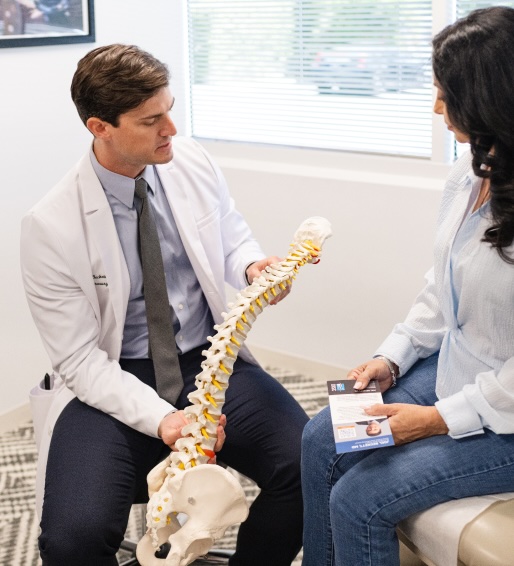
At Beckett NeuroSpine, board-certified, dual fellowship-trained neurosurgeon Dr. Joel Beckett carefully evaluates these changes to identify their cause, assess their severity, and recommend treatment to protect spinal cord function. Consultations are available in Beverly Hills and Marina del Rey, serving patients throughout Los Angeles, as well as in Las Vegas.
What Is Cervical Myelopathy?
Cervical myelopathy refers to impaired spinal cord function in the neck. It can result from compression, inflammation, infection, trauma, tumors, or vascular disorders.
This article focuses on degenerative cervical myelopathy, the most common form in adults. It develops when changes such as disc degeneration, bone spurs, or thickened ligaments narrow the spinal canal and place pressure on the spinal cord.
Cervical myelopathy differs from cervical radiculopathy, commonly called a pinched nerve. Radiculopathy affects a nerve root, typically causing pain, numbness, tingling, or weakness in part of the arm or hand. Myelopathy affects the spinal cord and can interfere with hand coordination, balance, walking, and leg control. Both conditions can occur together.
Symptoms often develop gradually and may appear without significant neck pain. Prolonged compression can cause lasting spinal cord damage, making prompt evaluation important when hand clumsiness, weakness, or changes in walking and coordination emerge.
Common Symptoms of Cervical Myelopathy
Degenerative cervical myelopathy often develops gradually. Early signs may include subtle changes in hand coordination, balance, or walking rather than severe neck pain.
Common symptoms include:
- Hand clumsiness or weakness: Patients may drop objects or have trouble fastening buttons, writing, typing, using utensils, or handling small items.
- Numbness or tingling: Altered sensation may affect the hands, arms, or other areas below the level of spinal cord compression.
- Balance or gait problems: Walking may feel unsteady, stiff, or less coordinated, particularly on stairs or uneven ground.
- Leg heaviness or stiffness: Spinal cord dysfunction can increase muscle tone and make the legs feel slow or difficult to control.
- Neck pain or stiffness: These symptoms may accompany cervical degeneration, although some patients with myelopathy have little or no neck pain.
- Electric-shock sensations: Bending the neck may trigger a brief shock-like sensation down the spine or into the arms or legs, sometimes called Lhermitte’s sign.
- Bladder or bowel changes: These symptoms are uncommon but may indicate advanced spinal cord dysfunction or another urgent neurologic condition.
Symptoms do not always develop in a predictable order, and their severity may not match the apparent degree of compression on MRI. Diagnosis depends on the overall pattern of symptoms, neurologic examination findings, and supportive imaging.
What Causes Cervical Myelopathy?
Cervical myelopathy can result from any disorder that damages or disrupts the spinal cord in the neck. Causes include inflammation, infection, trauma, tumors, vascular disorders, and structural compression. This article focuses on degenerative cervical myelopathy, the most common form in adults.
Degenerative cervical myelopathy develops when age-related changes narrow the spinal canal and compress the spinal cord. These changes may include:
- Disc degeneration and collapse: As cervical discs lose height and flexibility, the space available for the spinal cord may decrease.
- Herniated discs: Disc material can protrude into the spinal canal and place direct pressure on the cord.
- Bone spurs: Arthritis can cause extra bone to form along the vertebrae and joints, further narrowing the canal.
- Thickened or calcified ligaments: Ligaments around the spinal canal may enlarge, stiffen, or turn partly to bone and encroach on the spinal cord.
- Congenital spinal canal narrowing: Some people are born with a smaller-than-average cervical canal, which leaves less room for age-related changes before compression develops.
- Spinal instability or deformity: Abnormal movement or alignment can reduce the space around the spinal cord and contribute to repeated mechanical stress.
Several factors may contribute to cervical myelopathy. Someone born with a narrow spinal canal may have no symptoms for years, until disc degeneration, bone spurs, or thickened ligaments further reduce the space around the spinal cord.
Compression seen on an MRI does not, by itself, confirm myelopathy. The diagnosis depends on symptoms and neurologic examination findings that indicate impaired spinal cord function.
How Cervical Myelopathy Is Diagnosed
Diagnosing cervical myelopathy requires more than an MRI. Visible spinal cord compression does not always cause neurologic dysfunction, and the degree of compression may not reflect the severity of symptoms. Dr. Beckett evaluates imaging alongside the patient’s symptoms and neurologic examination to determine whether spinal cord function is affected.
The evaluation may include:
- Detailed symptom history: Dr. Beckett asks about changes in hand dexterity, grip strength, balance, walking, leg stiffness, numbness, weakness, and bladder or bowel function. The timing and progression of symptoms can help distinguish myelopathy from a pinched nerve, peripheral neuropathy, or another neurologic condition.
- Neurologic examination: The examination assesses strength, sensation, reflexes, coordination, hand function, and gait. Findings such as unusually brisk reflexes, pathologic reflexes, leg stiffness, or difficulty with tandem walking may indicate spinal cord dysfunction.
- MRI: Magnetic resonance imaging provides the clearest view of the spinal cord, discs, ligaments, and soft-tissue structures within the cervical canal. It can identify the location and cause of compression and may show changes within the spinal cord associated with injury.
- X-rays: Standing and, when appropriate, flexion-extension X-rays can show spinal alignment, disc-height loss, arthritis, deformity, or abnormal movement between vertebrae.
- CT or CT myelography: These studies may provide additional detail about bone spurs, calcified ligaments, prior surgical anatomy, or the shape of the spinal canal when MRI does not answer the necessary questions.
- Electrodiagnostic testing in selected cases: Nerve-conduction studies or electromyography may help distinguish cervical myelopathy from peripheral nerve disorders, such as carpal tunnel syndrome, or clarify whether a nerve root is also involved.
Dr. Beckett evaluates how imaging findings relate to the patient’s neurologic symptoms, how quickly those symptoms are progressing, and whether spinal instability or deformity contributes to the problem. This assessment helps determine which levels require treatment and the most appropriate surgical approach. Timely evaluation is important: relieving spinal cord compression can help prevent further decline, but deficits caused by prolonged injury may not fully resolve.
Treatment Options for Cervical Myelopathy
Treatment depends on the severity and progression of spinal cord dysfunction, the cause and location of compression, spinal alignment, and the patient’s overall health. Mild, stable cases may sometimes be monitored closely, while progressive or more advanced myelopathy often requires surgery to relieve pressure on the spinal cord and prevent further neurologic decline.
Non-Surgical Monitoring and Support
For selected patients with mild, stable degenerative cervical myelopathy, Dr. Beckett may recommend close observation rather than immediate surgery. Non-surgical care may include activity modification, medication for pain or stiffness, and carefully selected physical therapy to support mobility, strength, and function.
These measures do not remove pressure from the spinal cord. For that reason, non-surgical management requires regular neurologic examinations and, when appropriate, repeat imaging. Patients should report new or worsening hand clumsiness, weakness, balance problems, gait changes, or bowel or bladder symptoms promptly. If neurologic function declines or symptoms fail to remain stable, surgery may become the safer option to prevent further spinal cord injury.
Because the spinal cord is already compressed, patients should avoid forceful neck manipulation or traction unless specifically cleared by a spine surgeon.
Surgical Treatment for Cervical Myelopathy
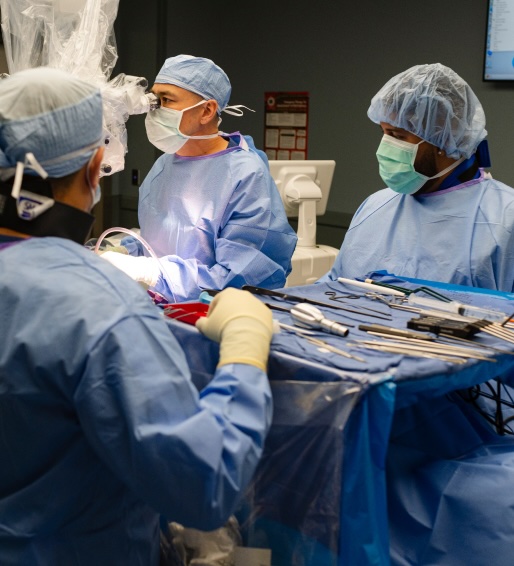
Surgery is generally recommended when degenerative cervical myelopathy is moderate, severe, or progressing. The primary goal is to relieve pressure on the spinal cord and prevent further neurologic decline. Some patients also regain strength, balance, coordination, or hand function, although recovery depends on the severity and duration of spinal cord injury.
The surgical approach depends on the location and number of compressed levels, spinal alignment, stability, bone quality, and the condition of the discs and facet joints. Options may include anterior decompression followed by fusion or artificial disc replacement, as well as posterior procedures such as laminoplasty or laminectomy with or without fusion. In selected cases, a minimally invasive spine surgery approach may reduce tissue disruption while still providing adequate decompression.
Dr. Beckett identifies which spinal levels contribute to cord dysfunction and whether stabilization is needed alongside decompression. Surgical planning prioritizes protecting the spinal cord, maintaining alignment and stability, and preserving motion when appropriate. Each procedure is tailored to the patient’s anatomy and long-term functional goals.
When to See a Spine Surgeon
A spine evaluation is appropriate when symptoms suggest that spinal cord function may be changing, especially when those symptoms are new, progressive, or affect daily activities. Patients do not need to wait for severe neck pain, because cervical myelopathy may present primarily through changes in hand function, balance, or walking.
Consider seeing a spine surgeon if:
- Symptoms are progressing: Worsening weakness, numbness, hand clumsiness, balance problems, or gait changes deserve prompt evaluation.
- Daily function is changing: Difficulty with buttons, handwriting, utensils, stairs, or walking may indicate that spinal cord dysfunction is affecting independence.
- MRI shows cervical spinal cord compression: Imaging alone does not confirm myelopathy, but it should be interpreted alongside symptoms and a neurologic examination.
- Symptoms involve more than one limb or do not fit a single pinched nerve: This pattern raises greater concern for spinal cord involvement.
Rapidly worsening weakness, significant difficulty walking, or new bladder or bowel dysfunction requires urgent medical attention. Prompt assessment helps determine the cause and whether immediate treatment is needed. For less acute symptoms, early evaluation can guide close monitoring or timely surgery to protect spinal cord function.
Personalized Cervical Myelopathy Care with Dr. Joel Beckett
Cervical myelopathy can affect the everyday abilities that support independence, from using your hands to walking confidently. Choosing the right treatment requires a clear understanding of spinal cord function, symptom progression, spinal alignment, and overall health.
Dr. Joel Beckett is a board-certified, dual fellowship-trained neurosurgeon whose expertise spans cervical spine surgery, motion preservation, minimally invasive techniques, and complex spinal reconstruction. At Beckett NeuroSpine, he combines careful evaluation with clear, personal guidance so patients understand their diagnosis, treatment options, and the reasoning behind each recommendation.
If you are experiencing symptoms of cervical myelopathy or have been told you have cervical spinal cord compression, schedule a consultation with Dr. Joel Beckett to discuss the next steps in your care. Consultations are available in Beverly Hills and Marina del Rey, serving patients throughout Los Angeles, as well as in Las Vegas.