


Laminectomy vs. Discectomy: What’s the Difference?
Neck or back pain may have several possible causes, but symptoms that radiate into an arm or leg—particularly when accompanied by numbness, tingling, weakness, or difficulty walking—can indicate pressure on a spinal nerve or the spinal cord. Identifying exactly what is creating that pressure is essential because different structural problems require different treatments.
Laminectomy and discectomy are both decompression procedures, but the distinction is not always as simple as bone versus disc. A laminectomy may provide access to structures that crowd the spinal canal, while a discectomy targets disc material that compresses a nerve. In some operations, elements of both procedures may overlap. The procedure name matters less than identifying the true source of compression and addressing it without unnecessary disruption to healthy anatomy.
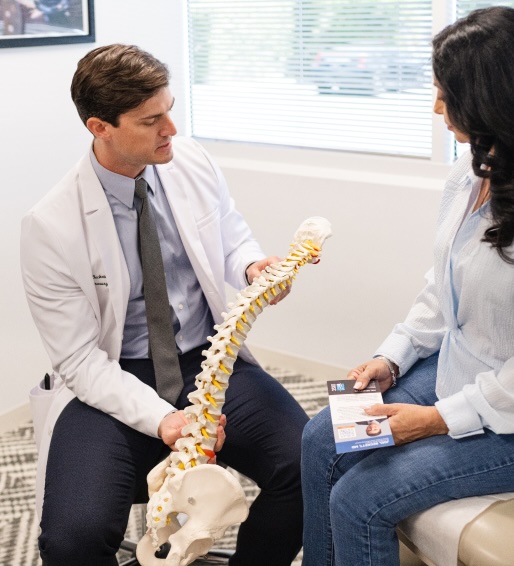
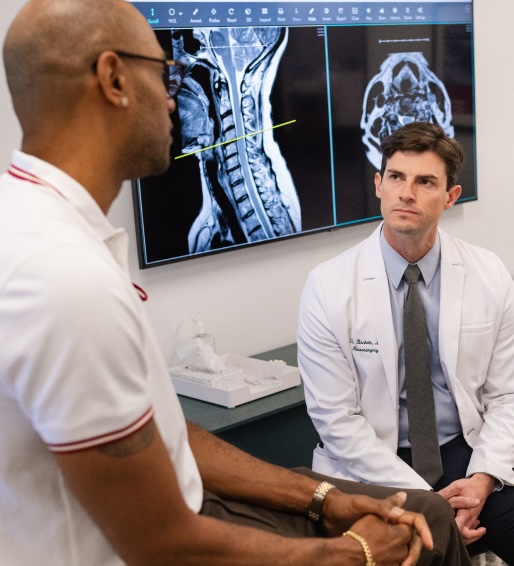
Dr. Beckett evaluates symptoms, neurologic function, imaging, spinal alignment and stability, previous treatment, and long-term goals before he recommends surgery. When decompression is appropriate, his goal is to relieve the pressure with the least disruptive approach that can provide a durable result while preserving stability and motion whenever possible.
Below, we explain what laminectomy and discectomy actually involve, where they overlap, and how Dr. Beckett determines which approach best fits the problem.
What Is a Laminectomy?
A laminectomy is a decompression procedure that removes part of the lamina, the bone that forms the back of the spinal canal, to create access to compressed nerves or the spinal cord. Importantly, the lamina itself is often not the source of the problem. Rather, removing a portion of it allows Dr. Beckett to reach and remove or reshape the structures beneath it that are crowding the spinal canal.
Laminectomy is often used to treat spinal stenosis, in which arthritis, bone spurs, thickened ligaments, disc changes, or several factors together reduce the space available for neural structures. Depending on the extent of compression, only a limited opening in the lamina may be necessary rather than removal of a large section of bone.
Patients who need this type of decompression may have leg pain, numbness, weakness, balance difficulty, or leg heaviness that worsens with standing or walking. In the right patient, relieving the underlying compression can improve walking tolerance, reduce nerve-related symptoms, and help protect neurologic function.
Common reasons for laminectomy:
- Spinal stenosis, especially when narrowing of the spinal canal compresses nearby nerves
- Bone spurs, thickened ligaments, or arthritis-related changes that crowd the spinal canal
- Lumbar nerve compression that causes leg pain, numbness, weakness, heaviness, or difficulty walking
- Cervical spinal cord compression that causes arm or hand symptoms, balance problems, coordination changes, or walking difficulty
What Is a Discectomy?
A discectomy is a decompression procedure that removes the portion of a damaged or herniated disc that is pressing on a spinal nerve. Unlike a laminectomy, the primary target is the disc material itself rather than broader narrowing within the spinal canal.
To reach the affected disc, Dr. Beckett may create a small opening in the lamina. This limited bone removal provides access to the nerve and disc without making the lamina the focus of the procedure. The goal is to remove only the disc material responsible for nerve compression while preserving as much normal anatomy as possible.
Discectomy is often used when a herniated disc causes pain that travels into the arm or leg. In the lumbar spine, this may cause sciatica. In the cervical spine, it may cause radiating arm pain, numbness, tingling, or weakness along a specific nerve pathway. Dr. Beckett determines whether discectomy is appropriate by matching the patient’s symptoms and neurologic examination with imaging that shows disc-related nerve compression.
Common reasons for discectomy:
- Lumbar radiculopathy, including sciatica, when disc material causes radiating leg pain
- Cervical radiculopathy when a herniated disc causes radiating arm pain, numbness, tingling, or weakness
- Persistent nerve pain that matches the patient’s exam and imaging findings despite appropriate non-surgical treatment
Laminectomy vs. Discectomy: Key Differences
Laminectomy and discectomy are both decompression procedures, and the distinction is not always as simple as bone versus disc. The more important question is what structure is actually causing pressure on the nerve or spinal cord.
When spinal stenosis creates broader narrowing, treatment may focus on removing or reshaping bone, thickened ligament, or other tissue that crowds the neural structures. When herniated disc material is the main problem, treatment focuses on removing the portion of the disc that is compressing the nerve.
These approaches can overlap. A discectomy may require a small opening in the lamina to reach the affected disc, while a decompression for stenosis may involve several structures within the same area. The procedure name matters less than identifying the source of compression and addressing it as precisely as possible.
In short, the key difference between laminectomy and discectomy is the primary source of compression: laminectomy addresses broader narrowing around the nerves or spinal cord, while discectomy targets disc material pressing on a nerve.
Think of the Lamina as the Roof
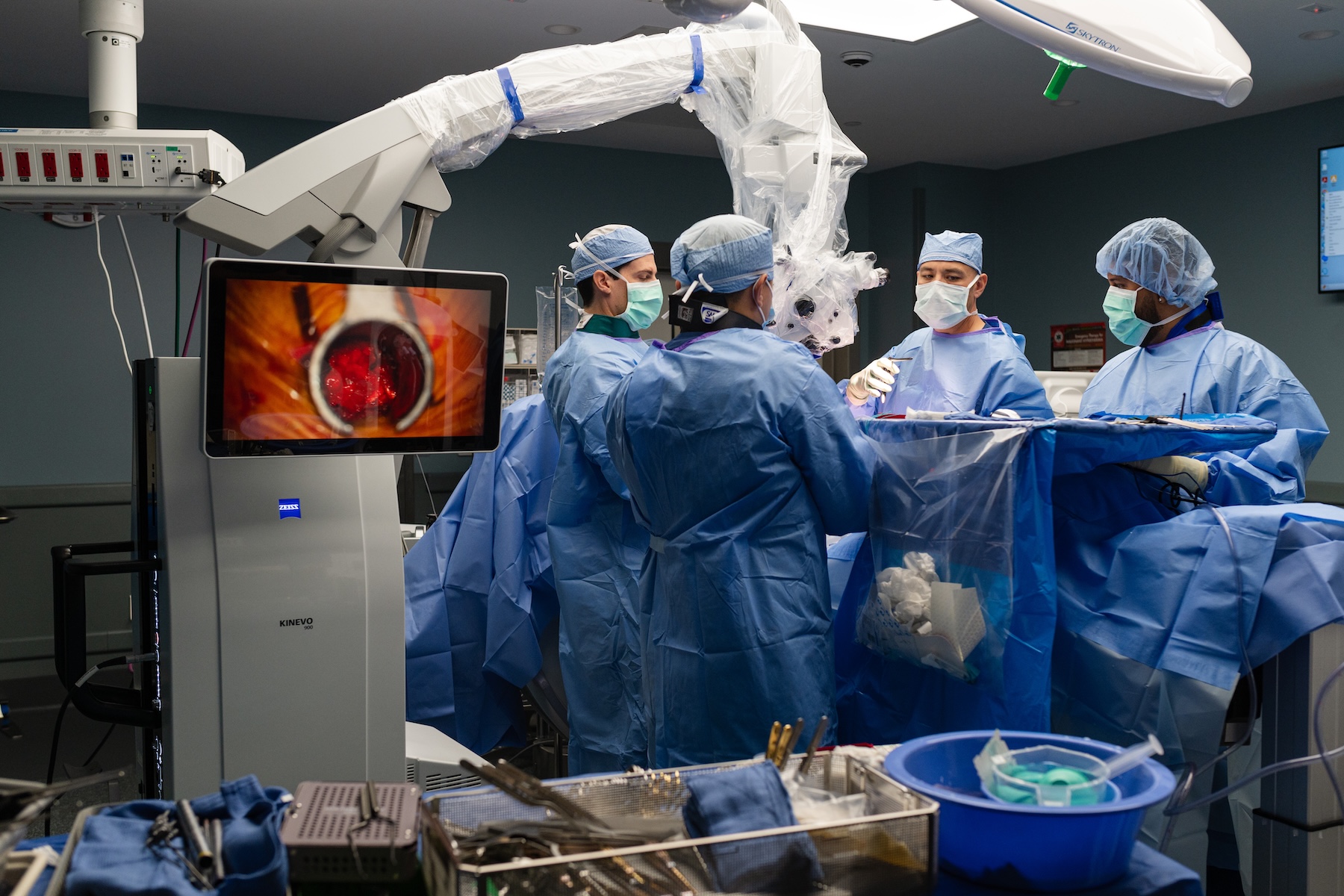
Dr. Beckett often compares the lamina to the roof of a house. The roof itself is usually not the problem. Instead, the structures beneath it may be crowding the nerves or spinal cord. To reach that area, Dr. Beckett may create a small opening in the lamina, much like opening part of a roof to access the space below.
The amount of bone removed depends on what needs to be treated. In many cases, only a limited opening is necessary. That same type of access may also be used during a discectomy to reach herniated disc material pressing on a nerve.
Symptoms That May Point to Each Procedure
Symptoms can provide important clues about the type of nerve compression, but they do not determine the procedure by themselves. Dr. Beckett looks at the pattern of pain, neurologic findings, imaging results, and spinal stability before deciding whether laminectomy, discectomy, or another treatment approach makes the most sense.
- Laminectomy: Often considered when leg heaviness, cramping, or walking difficulty improves with sitting or leaning forward. In the cervical spine, balance problems or hand clumsiness may point to spinal cord compression.
- Discectomy: Often considered when pain radiates sharply down the arm or leg along a specific nerve pathway, as with sciatica or cervical radiculopathy.
Are Laminectomy and Discectomy Minimally Invasive?
Laminectomy and discectomy can sometimes be performed using minimally invasive techniques, but the approach depends on the patient’s anatomy, diagnosis, and degree of compression. A small, contained disc herniation may allow a more targeted minimally invasive discectomy, while more advanced spinal stenosis or multi-level compression may require a different surgical plan.
The term “minimally invasive” should not be reduced to incision size alone. The goal is to relieve pressure on the affected nerve or spinal cord while limiting unnecessary disruption to surrounding muscle, bone, and soft tissue whenever possible. In some cases, that means a focused minimally invasive decompression. In others, a more open or complex approach may provide the safest and most durable result.
Dr. Beckett has experience with minimally invasive spine surgery, cervical spine surgery, lumbar spine surgery, and complex spine surgery. He selects the approach that best fits the underlying problem, with the priority of safely decompressing the nerve, protecting stability, and supporting long-term function.
How Recovery May Differ After Laminectomy vs. Discectomy
Recovery after either procedure depends on the diagnosis, the location of surgery, the number of levels treated, and how long the nerve has been compressed. That said, each procedure tends to follow a different pattern.
After discectomy, radiating arm or leg pain often improves relatively early once pressure on the nerve is relieved. Most patients return to light activity within a few weeks. Numbness, tingling, or weakness may take longer to resolve — particularly when the nerve was compressed for an extended period before surgery.
After laminectomy, recovery can vary more. Because laminectomy typically treats broader spinal narrowing across one or more levels, the pace depends on how severe the stenosis was, how many levels were decompressed, and how significantly walking tolerance or strength was affected before surgery. Improvement in leg symptoms may be gradual rather than immediate.
For both procedures:
- Heavy lifting, bending, and twisting are restricted during early healing
- Physical therapy typically begins within a few weeks to rebuild core support and restore movement mechanics
- Pain often improves before numbness or weakness, especially after long-standing nerve compression
- Fusion may be added in some cases, which extends the recovery timeline considerably
Dr. Beckett outlines recovery expectations specific to your procedure, health profile, and goals so your timeline reflects your surgery.
Questions to Ask Before Laminectomy or Discectomy
Before choosing a spine procedure, patients should understand not only the name of the operation, but the reason it is being recommended. The most useful questions help clarify the source of compression, the expected benefit, the risks of waiting, and whether a less invasive option may be appropriate.
- What is causing my nerve compression? This helps determine whether the problem comes mainly from spinal stenosis, a herniated disc, bone spurs, thickened ligaments, or more than one factor.
- Is the pressure coming from bone, ligament, disc material, or a combination? The source of compression often guides the type of decompression. The source of compression helps determine which structures must be addressed during decompression.
- Am I a candidate for minimally invasive spine surgery? Some patients qualify for a less disruptive approach, but the safest option depends on anatomy, severity of compression, and spinal stability.
- What symptoms are most likely to improve? Radiating nerve pain may respond differently than numbness, weakness, or long-standing walking difficulty, so expectations should be specific.
- What are the risks of waiting? In some cases, continued observation is reasonable. In others, worsening weakness, spinal cord compression, or progressive walking problems may require more urgent treatment.
- Do I need decompression alone, or would stabilization also be necessary?
This helps clarify whether relieving pressure is enough or whether instability, deformity, or severe degeneration could require another procedure.
Choosing the Right Spine Procedure With Dr. Joel Beckett
Laminectomy and discectomy are both designed to relieve nerve compression, but they address different structural problems. While they both may be performed during the same surgery, they are not interchangeable. Choosing the appropriate procedure begins with identifying exactly where the pressure originates, determining how it affects strength, sensation, walking, and daily function, and evaluating the overall stability and alignment of the spine.
Dr. Beckett approaches each case individually. Whether symptoms are caused by spinal stenosis, a herniated disc, or another form of nerve compression, he considers the complete clinical picture before recommending treatment. When surgery is appropriate, his goal is to relieve pressure using the least disruptive approach necessary while preserving healthy anatomy, stability, and motion whenever possible.
If you have been advised to consider a laminectomy or discectomy—or are still seeking clarity about the cause of your symptoms—schedule a consultation with Dr. Beckett. He will review your imaging, examination findings, previous treatment, and long-term goals to help you understand which options may be most appropriate for you.
Dr. Beckett welcomes patients at Beckett NeuroSpine locations in Beverly Hills, Marina del Rey, and Las Vegas.